What is Mythology?
According to mythology experts Scott Leonard and Michael McClure, authors of the text Myth and Knowing, myths are ancient stories that are created as an “attempt to answer the enduring and fundamental human questions” regarding topics such as individual purpose, creation of the universe, and morality and societal values. Myths are humans’ attempt to explain the universe and its contents across various times and cultures through the art of storytelling. Having started in most cases as an oral art, myths are largely created with the purpose of being recited and shared by a collective group of people (Parisinou, 396).
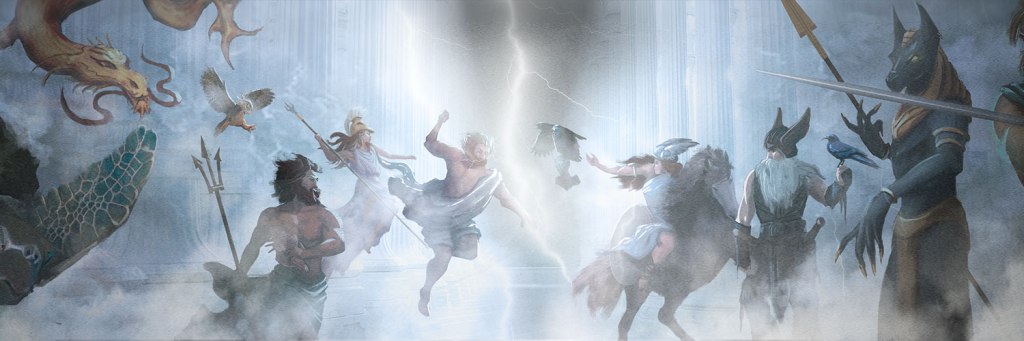
The common themes found within ancient mythology are so common around the globe that it may be plausible to suggest “the existence of sets of cross-cultural links underlying the organization and basic needs of pre-industrial and pre-literate societies who relied upon mythology as a means for their survival” (Parisinou, 396). Despite differences of language, geography, or culture, similarities that are present within mythological stories and their themes lead some to believe that the world may be closely linked in organization and basic needs. In a way, myths bind humanity together in a way that few other things do; this is indebted to those commonalities of questioning individual purpose, creation, morality and values.
Why study Mythology?
As I briefly stated before (take a stroll to my homepage!), mythology may at first seem unimportant and distant for many of us modern-day folks. However, it’s amazing to understand just how big of an influence ancient stories can actually have on contemporary thinking and values. Surprisingly, nearly any story you’ve heard or movie you’ve watched holds key elements and themes that are fundamentally associated with specific ancient mythology or broad mythological themes. Details such as character archetypes, situational tropes, and other more general, common characteristics from various cultures’ myths make up the very foundation of the social world as we know it. Crazy, right?
As part of my undergraduate work, I have done some research into the scholarship of mythology which you can read up on in my scholarship page. For some fun reading about how mythology is connected to our lives today, please view my blog.
The Trickster Figure
What is the Trickster figure? The trickster figure is a mythological archetype characterized by mischief and trickery and is just as present in ancient myths as it is in our modern world today. Described as a “mythopoeic imagination common to all mankind,” its archetypal figure is among those most easily recognizable, regardless of cultural or historical context, due to human beings’ ability to relate to his or her egocentric, primal urges that fail to live up to divine standards (Maurone, 230). The trickster is intriguing because it does not fit a specific mold; instead, it has the ability to embody a variety of traits and qualities that are well-known to human beings. The inherent imperfection in the trickster is accompanied by cunning and complexities in personality which helps readers and viewers alike to relate to this figure.
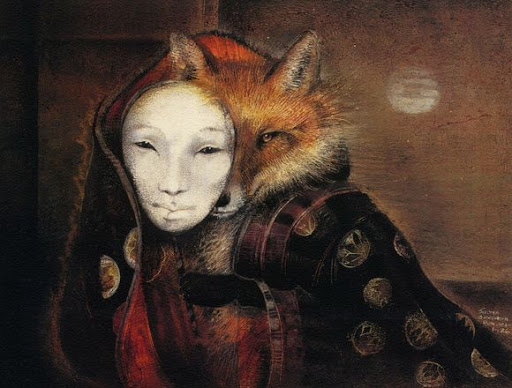
The trickster is arguably the most complex of mythological archetypes due to its unfailingly varied character traits. A trickster is usually a deceitful character acting in his or her own interests; however, this character may also be playful, humorous, selfish, lazy, dishonest, shape-shifting, yet courageous and heroic. This contradictory selection of traits often leads to the trickster character being funny and absurd at times. At other times, the extreme freedom of the trickster allows him or her to act in opposition to their godly counterparts. Maurone goes so far as to suggest that tricksters “destroy the sanctimonious with flatulence and excrement (236). While at times the trickster’s actions may bring entertainment and fulfillment, they very well may also bring desecration.
 Alexia's Mythology Website
You need a home page and you need to provide context for this page
LikeLike
excellent work this week
LikeLike